Flour power raises a farmhouse restoration in Kilkenny

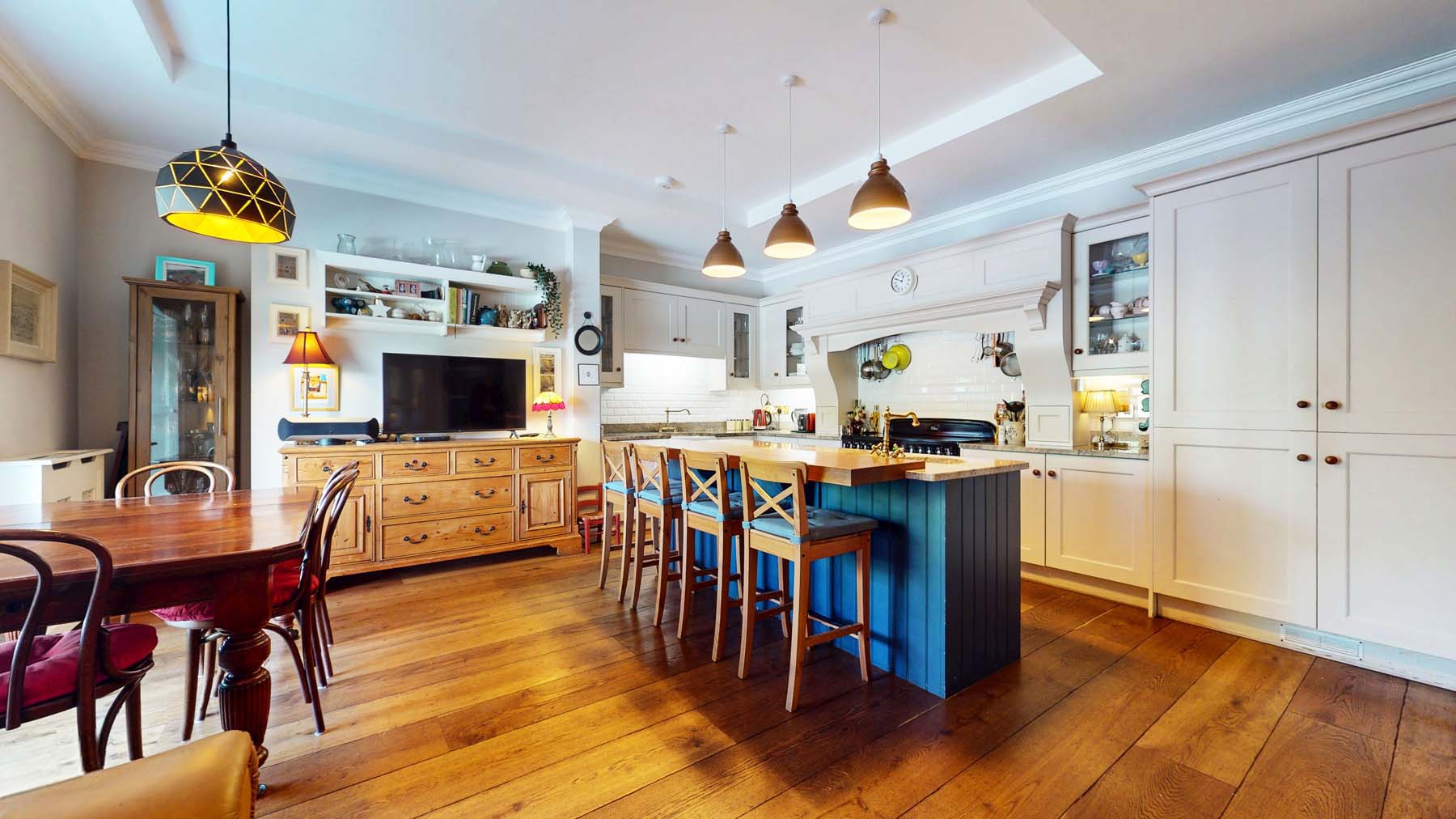
A milling family took 15 years to bring a derelict farmhouse back to life The exterior of Crowbally, Dungarvan, Co Kilkenny Sue and Bill Mosse The dining area at Crowbally, Dungarvan, Co Kilkenny The dining area of Crowbally, Dungarvan, Co Kilkenny The living room of Crowbally, Dungarvan, Co Kilkenny The staircase of Crowbally, Dungarvan, Co Kilkenny A roof level bedroom at Crowbally, Dungarvan, Co Kilkenny The garden of Crowbally, Dungarvan, Co Kilkenny The sitting room of Crowbally, Dungarvan, Co Kilkenny An aerial view of Crowbally, Dungarvan, Co Kilkenny Crowbally, Dungarvan, Co Kilkenny Asking price: €550,000 Agent: DNG Ella Dunphy (056) 7786000 How long does it take to restore an uninhabitable derelict period farm house? Fifteen years, say Bill and Sue Mosse, members of the well known flour milling family from Kilkenny who went the full mile with a cut stone building. “We're the sixth generation now. We used to operate the Bennettsbridge Mills and later Mosstown Mills, producing flour and animal feed – part of a milling tradition in the area that goes back centuries," Bill says. Sue and Bill Mosse When looking for a restoration project in rural parts of the country in the early 1990s, the Mosses came across Crowbally – near Dungarvan village and 7km from Thomastown. “It was empty for 12 years before we bought it, so it was quite derelict. The previous owners were three unmarried siblings who hadn’t invested much in structural and cosmetic maintenance,” Sue says. The property predates Ireland’s first census in 1821 and was part of a clachan, the ancient cluster settlements more typical in rural Ireland before the 19th century. "There was no big landowner or anyone famous in the house – it was part of a small farming hamlet, which was occupied by local families over the years," she adds. The five-bedroom, five-bathroom 2,600 sq ft property comprises the main house and a renovated cottage with a yard, old outbuildings and an acre of land, including vegetable patches and courtyards. The dining area at Crowbally, Dungarvan, Co Kilkenny "We really liked the character of the property and the fact that it had an extra little annex beside it," says Sue. After purchasing the house in 1991, the Mosses took up residence in a rental property for the duration of the restoration project. "We did the big structural work in the first two years. Between 1992 and 1993 we gutted the place. You wouldn't have lived here," Bill says. “The house needed complete refurbishment including new wiring, plumbing, heating, drainage and insulation. We stripped the structure back to its walls, replaced all floors, re-roofed both wings, and replastered the entire interior. "It started off as a two-storey farmhouse, but we removed the roof on either side, so only the central section retained an upper floor,“ he adds. The dining area of Crowbally, Dungarvan, Co Kilkenny Stables and harness rooms were adapted to create a kitchen and additional living areas, with new doorways connecting them to the core of the house. “Most of the work was done by local tradespeople, while materials were sourced locally. At the time, you didn't have as much choice as you do now, but you got more value for money," Sue says. “In the early 1990s, the cost of building, skilled labour and restoration work may have been lower, but interest rates were much higher. Borrowing was up to 15pc – people often forget that when they look back. Hence we kept the costs down by sourcing items from the salvage yard and working on the house and garden over a 15-year period, once we got the big structural stuff out of the way," Sue says. The living room of Crowbally, Dungarvan, Co Kilkenny “We used local craftsmen including stonemason Pat Butler, who built the boundary walls and stone entrances. A lot of the people who worked on the house have retired now," Bill adds. Despite it being an old house, the couple were spared any nasty surprises over the years. "We weren't afflicted with foundational issues, mould or major costly plumbing problems, Sue says. The main entrance of the ground floor contains an entrance hall with tiled flooring, a guest bathroom, a utility room with storage, a kitchen/dining area with a marble-topped island and a living room with a solid-fuel stove, a dining area with exposed beams and garden access. The staircase of Crowbally, Dungarvan, Co Kilkenny "We have laminate flooring in the kitchen and dining area. The solid timber kitchen cupboards were hand made locally, but we bought the kitchen tiles in Portugal. We found a place on holidays, which made the tiles, so we ordered them and got them hand painted and shipped them over to Ireland," Sue says. The sitting room features a hearth made from local Kilkenny marble with a timber mantelpiece from a salvage yard. "In the dining room, we uncovered and restored the original fireplace that had been bricked up, retaining the old timber beam and large chimney structure. We used sourced timber throughout," she adds. A roof level bedroom at Crowbally, Dungarvan, Co Kilkenny Upstairs, the property has three bedrooms including one ensuite double bedroom, one additional double bedroom, and one single bedroom. "We haven't done much on the upstairs in recent years, but it could be suitable for use as a home office." In terms of heating, the couple had a more energy-efficient condensing oil boiler fitted. "In the winter we use the open fire in the main living room and a wood-burning stove in the snug." The gardens around the house evolved gradually over several years, incorporating stone walls, cobbled pathways, and mature planting. The garden of Crowbally, Dungarvan, Co Kilkenny "When we moved in it was just a field. Now the gardens have ponds and dedicated areas for growing your own fruit and vegetables," Sue adds. “There are multiple outdoor seating areas positioned for morning and evening sunlight. The house is east facing. You can see Mount Leinster – Kilkenny's highest mountain – from one side. You can have your morning coffee and then there’s the spot where you can have your G&T in the evening, so the sun always shines somewhere.” The sitting room of Crowbally, Dungarvan, Co Kilkenny The couple, who have two adult children, then renovated the small cottage within the yard to include two bedrooms and a kitchenette. "It includes an open-plan kitchen and dining area, two ensuite double bedrooms, a walk-in wardrobe and two bathrooms across two floors," Sue explains. "The annex has plenty of space – we moved in there recently, while my son and his family lived in the main house. Like us, he and his family are doing a restoration at a farmhouse nearby," Sue says. "We're both retired now, but we want to stay local. We're hoping to move to Thomastown and downsize, but we're not afraid of some restoration." An aerial view of Crowbally, Dungarvan, Co Kilkenny Sue says she will miss the house and garden. "The garden really evolved over the years. I added lawns, courtyards, vegetable beds, there's a fruit cage and polytunnel. We grow raspberries, blackcurrants, peas, beans, and there are fruit trees bearing apples and pears, even cabbages, carrots and parsnips, so we hardly ever have to buy vegetables. It’s a self-sufficient, organic ecosystem – complete with hens and ducks,' she adds. The people who might be interested in the property could be interested in continuing the smallholding, she says. "Or they can turn the garden back into grass if they're not green fingered. You don't have to be interested in gardening to enjoy the house. It's a family home and it's big enough for gatherings and family celebrations and lots of pets – like our dogs Ted and Thomas," Sue says. "It would also work for someone commuting to Dublin and working from home. It's a house that needs to be lived in. Like any old house, it needs humans to thrive." DNG Ella Dunphy seeks €550,000.

LWK Estate Agents
Your Trusted Property Partner in South Dublin
– Residential Sales
– Commercial Properties
– Property Management
– Professional Valuations